BISU
由我校党委宣传部、中国网新闻评论部、北京日报社国际传播部共同出品的《我眼中的北京非遗》第二季——《大运河上的北京非遗》系列融媒体作品,于2026年1月20日正式发布。该系列作品旨在推动北京非物质文化遗产的国际传播与活态传承,通过中国网、北京日报客户端、北京电视台客户端以及我校海内外媒体矩阵同步播出。
我们将陆续推出该系列融媒体作品,带领广大师生、校友和社会各界朋友,沿着大运河流动的文脉,一同走进北京非遗的生动现场,感受其跨越时空的生命力与创造力。让我们共同关注、参与传播,在光影与故事中深化对中华优秀传统文化的理解与热爱,助力北京非遗走向更广阔的世界舞台。
谁能想到,辛夷、蝉蜕、白芨、木通这四味寻常中药材,在一双手中经过翻折、粘合,竟能化作承载千年故事、充满东方智慧的“活生灵”?身为北京民间艺术家协会会员、通州区民间艺术家协会会长的毛猴传承人张正老先生,自幼痴迷民间艺术,尤其对毛猴情有独钟,后得民间艺术大师“毛猴曹”曹仪简先生悉心指点,又经多年摸索实践,终练就了化药为艺的精湛技艺。
Four ordinary ingredients from traditional Chinese medicine—Xinyi (magnolia flower bud), Chantui (cicada slough), Baiji (bletilla striata), and Baiji (bletilla striata)—could be transformed by a pair of skilled hands into “living creatures” that carry stories of millennia and embody the wisdom of the East. As a member of the Beijing Folk Artists Association and president of Tongzhou District Folk Artists Association, Mr. Zhang Zheng, an inheritor of the Maohou (hairy monkey, a kind of traditional Beijing folk figurine made from medicinal herbs), has been fascinated by folk art since childhood, with a particular fondness for Maohou figurines. Under the guidance of renowned folk artist Cao Yijian, known as “Maohou Cao”, and after decades of exploration and practice, he finally mastered the delicate skill of transforming medicinal materials into expressive works of art.
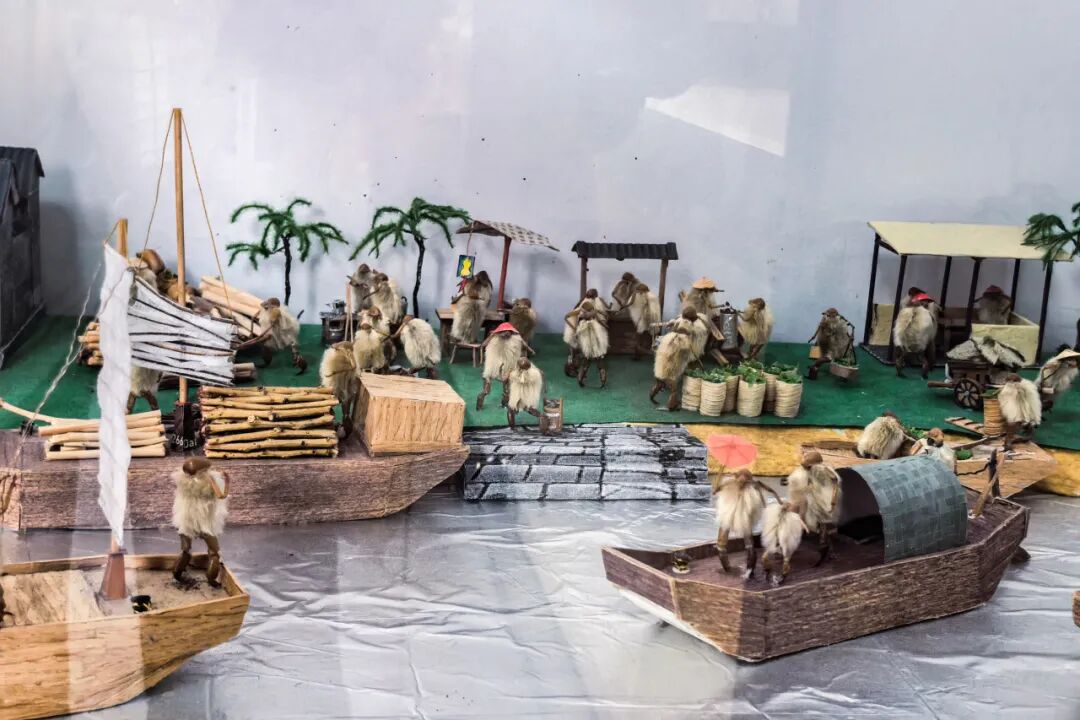
大运河毛猴作品
Maohou work about the Great Canal
通州大运河畔,水声悠悠,岸边一间飘着温润药香的工作室里,只见指尖一挑、一粘,一只神态鲜活的毛猴便跃然眼前。他从古今文化、民风民俗与现实生活中寻得的灵感,作品俗中见雅、风趣灵动,不少佳作被国内外友人收藏。这门诞生于京城药铺的百年手艺,虽无华丽修饰,却在四十余载的坚守与创新中,突破时光桎梏,成为连接传统与现代、东方与西方的文化纽带。
By the serene banks of the Tongzhou Grand Canal, the gently sound of flowing water accompanies the warm, herbal scent wafting from a nearby studio. There, with a flick and a press of his fingers, Mr. Zhang brings a vivid Maohou figurine to life. Inspired by ancient and modern culture, folk customs and everyday life, his works blend rustic simplicity with elegance, exuding wit and liveliness. Many of his masterpieces have been collected by friends both in China and abroad. This century-old craft, born in pharmacies of old Beijing, lacks ornate embellishment. Yet, through honed by over forty years of dedication and innovation, it has transcended the constraints of time to become a cultural bridge connecting tradition with modernity, and the East with the West.
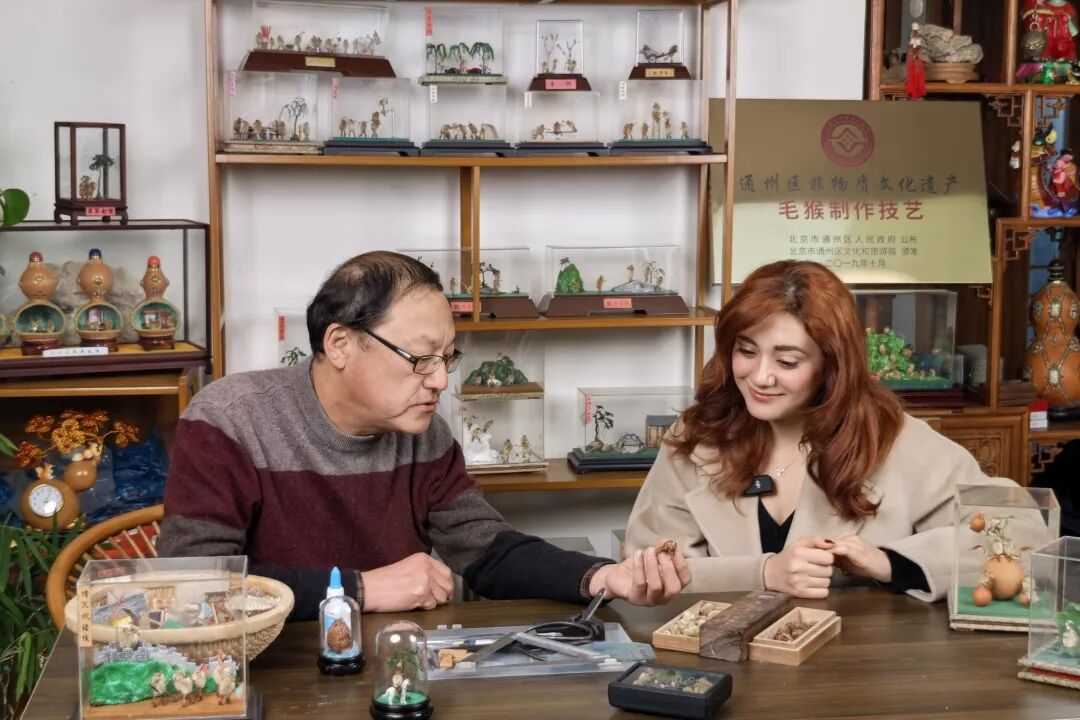
张正老先生指导留学生颜爱玲体验毛猴制作
Mr. Zhang Zheng guides international student Eliz in experiencing the making of Maohou figurine
而这份连接,全在于他指尖流转的匠心与时光。只见他捏起一枚薄如蝉翼的蝉蜕,用镊子轻轻修剪、调整角度,转眼便化作“小猴”灵动的四肢,与辛夷花苞做的猴身贴合,再点上少许白芨熬制的胶,一只鲜活的毛猴雏形已然显现。四十余载光阴,他以匠心为笔、草木药材为墨,让这门诞生于京城药铺的百年手艺,在运河文化的滋养下,突破时光桎梏,焕发别样生机。
This connection is embodied in every movement of his fingertips. Pinching a cicada slough as thin as a cicada’s wing, Mr. Zhang trims it gently and adjusts its angle with tweezers. In the blink of an eye, it is transformed into the nimble limbs of a “little monkey”. Attached to a magnolia bud serving as the monkey’s body and secured with a dab of glue made from bletilla striata—and a vivid Maohou figurine begins to take shape. Over forty years, Mr. Zhang has worked with patience and precision, shaping herbal materials into vivid expressions of a living tradition; he has allowed this century-old skill, born in Beijing’s pharmacies, to thrive under the nourishing influence of canal culture, breaking free from the constraints of time and bloomed with unique vitality.
毛猴的起源,藏着一则充满市井烟火气的巧思。清道光年间,一位药铺伙计遭掌柜刁难,心生郁结,便随手取来柜台边的四味中药材——辛夷、蝉蜕、白芨、木通,拼搭出“掌柜训伙计”的模样以泄愤。没想到这看似随意的创作,却因形态滑稽、寓意鲜活引得众人称赞,“以猴拟人”的毛猴技艺从此在民间悄然流传。
The origin of Maohou hides a clever folk tale rooted in the bustling atmosphere of everyday life. During the Daoguang reign of the Qing Dynasty, a pharmacy clerk, frustrated by his boss’s harsh treatment, randomly picked four medicinal materials from the counter--magnolia buds, cicada sloughs, bletilla striata, and akebia quinata--and assembled them into a figurine depicting of “the boss scolding the clerk” to vent his anger. Unexpectedly, this seemingly casual creation, with its humorous form and vivid symbolism, drew praise from onlookers. Thus, the art of “using monkeys to portray humans” quietly spread among people.
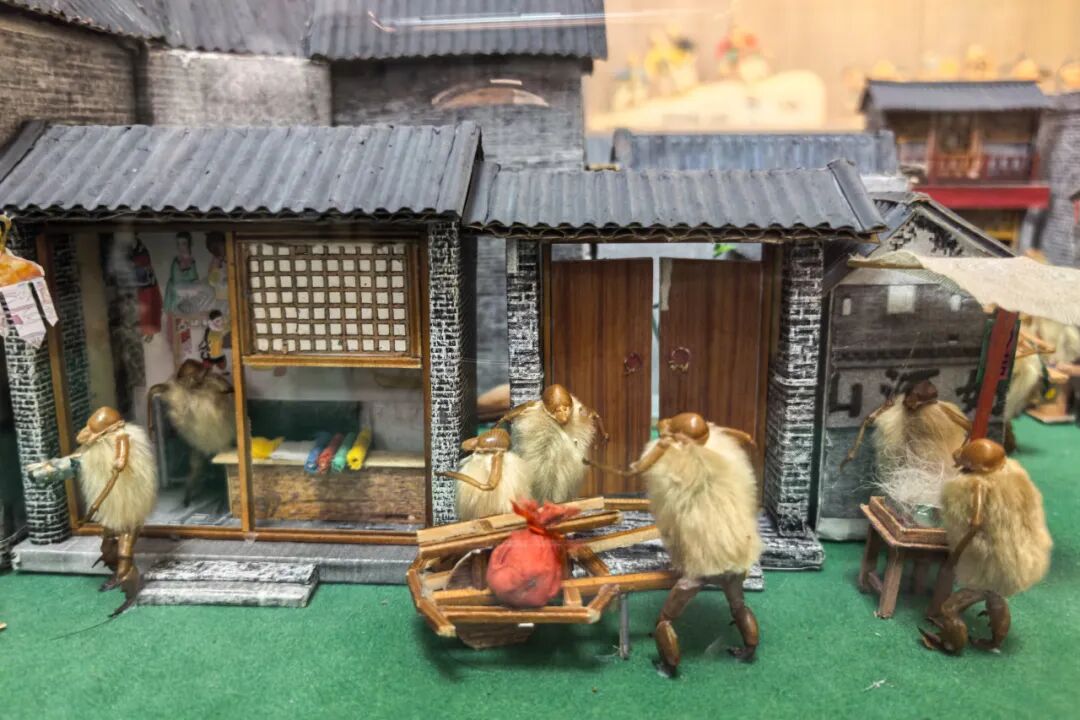
充满市井烟火气的毛猴作品
A Maohou work brims with the the bustling atmosphere of everyday life
“这四味药是毛猴的灵魂,缺一不可,”张正老先生向来访的留学生爱玲展示着整齐码放的原料,指尖抚过带绒毛的辛夷花苞,“辛夷的蓬松质感,正是猴身的灵动底色;蝉蜕头壳尖俏、四肢分明,正好勾勒出不同人物的神态;白芨熬成的胶天然无杂,粘合牢固又不损药材本味;木通裁成细条,便能做成桌椅、乐器等小道具,为作品点睛。”
“These four medicinal ingredients are the soul of Maohou; none can be omitted,” Mr. Zhang explains to the visiting international student Eliz, pointing to the neatly arranged materials. His fingers gently brush the fuzzy magnolia buds. “Its fluffy texture of magnolia buds provides the lively foundation for the monkey’s body. Cicada sloughs, with their pointed head and distinct limbs, are perfectly outlines the expressions of different postures and emotion. The glue made from bletilla striata is natural and pure, bonding firmly without altering the original quality of the materials. Akebia quinata, cut into thin strips, can be crafted into small props like tables, chairs, or musical instruments, adding the finishing touch to the work.”
祖辈们早已将毛猴与运河紧密相连。漕运兴盛之时,他们常以漕工劳作、商人交易、游船往来的场景为题材进行创作,让毛猴成为记录大运河兴衰流转的独特文化载体。
Ancestors long ago connected Maohou closely with the Grand Canal. During the prosperous era of water transport, craftsmen often depicted scenes of canal workers laboring, merchants trading, and boats coming and going in their works, making Maohou a cultural medium that recorded the rise and fall of the Grand Canal.
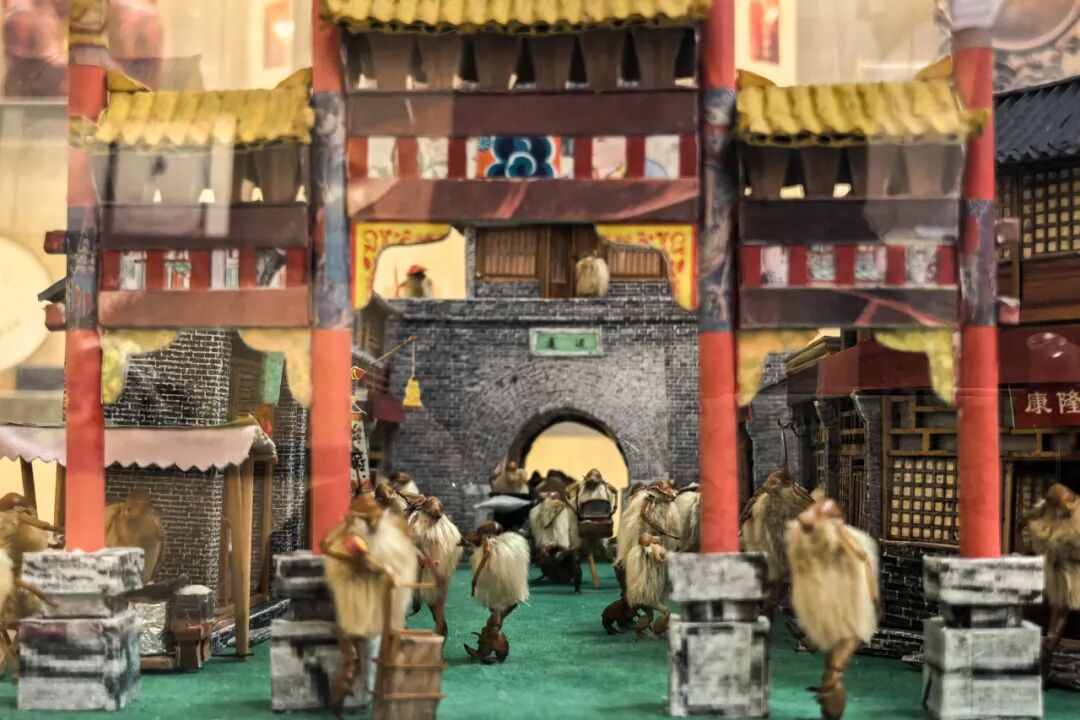
毛猴作品记录大运河的兴衰流转
Maohou works document the rise and decline of the Grand Canal
毛猴真正的魅力,在于其含蓄通透的东方幽默与深刻内涵。不同于西方讽刺漫画的直白尖锐,也不同于木偶的夸张外放,毛猴无需繁复色彩渲染,仅凭中药材的自然形态与肌理,便能将故事的精髓、人物的性情藏于方寸之间。
The true appeal of Maohou lies in its subtle yet profound Eastern humor and philosophy. Unlike the straightforward sharpness of Western satire or the exaggerated expression of puppetry, Maohou require no complex coloring. Relaying solely on the natural forms and textures of Chinese medicinal materials, they captures the essence of stories and the personalities of characters within a compact space.
自曹仪简大师将毛猴升华为“立体漫画”后,这门艺术更添了思想重量。张正老先生创作《烽火戏诸侯》时,特意选用粗壮臃肿的辛夷花苞塑造周幽王的傲慢体态,将蝉蜕剪去边角做成歪斜的王冠,暗喻王权的失序;而那些捧着烽火台模型的“小猴”,则以纤细蝉蜕制成,四肢紧绷、神态慌张。通过造型的强烈反差,将荒淫误国的教训悄然传递。“反面形象传正面思想,不刻意说教、不尖锐批判,在滑稽的形态里藏着温和的劝诫,这是毛猴的智慧,也是中国人骨子里的处世通透。”张正老先生指着作品,语气里满是对这门手艺的敬畏。
Since Master Cao Yijian elevated Maohou to 3D cartoon, the art has gained even greater intellectual weight. For his work “Beacon Fires for the Beauty”, (which means abusing the beacon fire warning system for personal amusement), Mr. Zheng intentionally used thick, bulky magnolia buds to shape the arrogant physique of King You of Zhou. He trimmed the cicada slough into a tilted crown, hinting at the disorder of royal authority. Meanwhile, the “little monkeys” holding beacon tower models were made from slender cicada sloughs, with tense limbs and panicked expressions. Through this stark contrast in forms, the lesson of a kingdom led astray by indulgence is quietly conveyed. “Maohou delivers positive messages through reverse imagery without deliberate preaching or sharp criticism, just gentle warnings in humorous forms. This is the wisdom of Maohou and reflects the innate clarity in the Chinese approach to life,” Mr. Zhang remarks, pointing to his work,his tone filled with deep reverence for this craft.
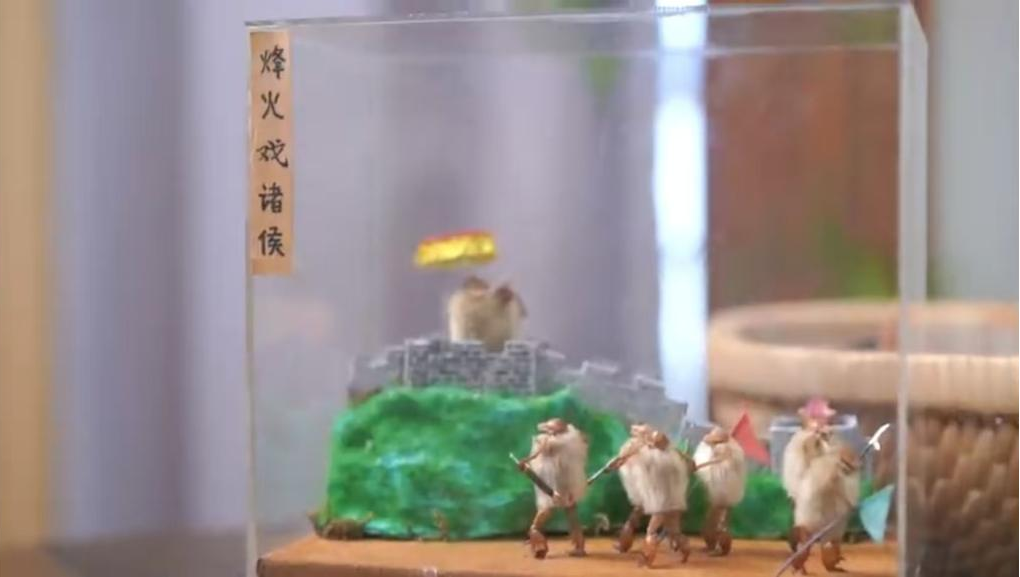
毛猴作品《烽火戏诸侯》
Maohou work “Beacon Fires for the Beauty”
四十余载的传承之路,并非一帆风顺。上世纪九十年代,随着娱乐方式日渐丰富,毛猴这门古老手艺渐渐被大众遗忘。张正老先生的作品摆在集市上,一整天也难卖出一件,就连跟着他学手艺的几个徒弟,也因看不到前景、耐不住寂寞纷纷离开。那段日子,他看着满屋子的毛猴作品与闲置的工具,心中酸楚焦急,一度将镊子、竹筐等工具收进木箱,半年多没再碰过。可每当夜深人静,祖辈传艺时的嘱托、毛猴作品里蕴藏的老北京记忆与运河故事,以及偶尔有人辗转寻来求购老作品时的期盼眼神,都让他难以割舍。最终,对文化根脉的牵挂,让他重新打开木箱,拿起工具,决心守住这门濒临失传的手艺。
Mr. Zhang’s four-decade journey as a cultural inheritor has been far from smooth. In the 1990s, as entertainment options diversified, this ancient craft of Maohou gradually faded from the public memory. Mr. Zhang’s works would sit at market stalls all day without a single sale. Even the few apprentices who had been learning from him left one after another, discouraged by uncertain prospects and the loneliness of the work. During that period, seeing his studio filled with Maohou works and idle tools, he felt a mix of sorrow and anxiety. He even packed away his tweezers, bamboo baskets and other tools in a wooden box, leaving them untouched for over half a year. Yet, in the stillness of the night, the teachings passed down by his ancestors, the memories of old Beijing and the Grand Canal stories embedded within Maohou works, and the eager eyes of those who occasionally sought out his old pieces through various channels, all made it impossible for him to let go. Ultimately, his devotion to cultural roots compelled him to open the wooden box again, pick up his tools, and resolve to safeguard this nearly lost craft.
如今,毛猴在张正老先生的坚守与创新中,悄然焕发新生。在与留学生爱玲这样的年轻群体互动时,他清晰地感受到两代人对毛猴的不同兴趣点:老一辈偏爱作品里的怀旧感,能从熟悉的场景中找到过往的影子;年轻人则更在意创意与共鸣,总会惊叹“原来老手艺也能这么潮”,主动拍照分享,甚至跃跃欲试想要亲手创作。
Today, Maohou is experiencing a quiet reviving through Mr. Zhang’s perseverance and innovation. When interacting with young people like international student Eliz, he clearly perceives the different interests across age groups: the older generation cherishes the nostalgia in the works, finding echoes of the past in the familiar scenes; young people, however, are more amazed by the creativity and resonance, exclaiming, “I never knew traditional crafts could be so trendy!” They eagerly take photos to share and even express a desire to try creating their own pieces.
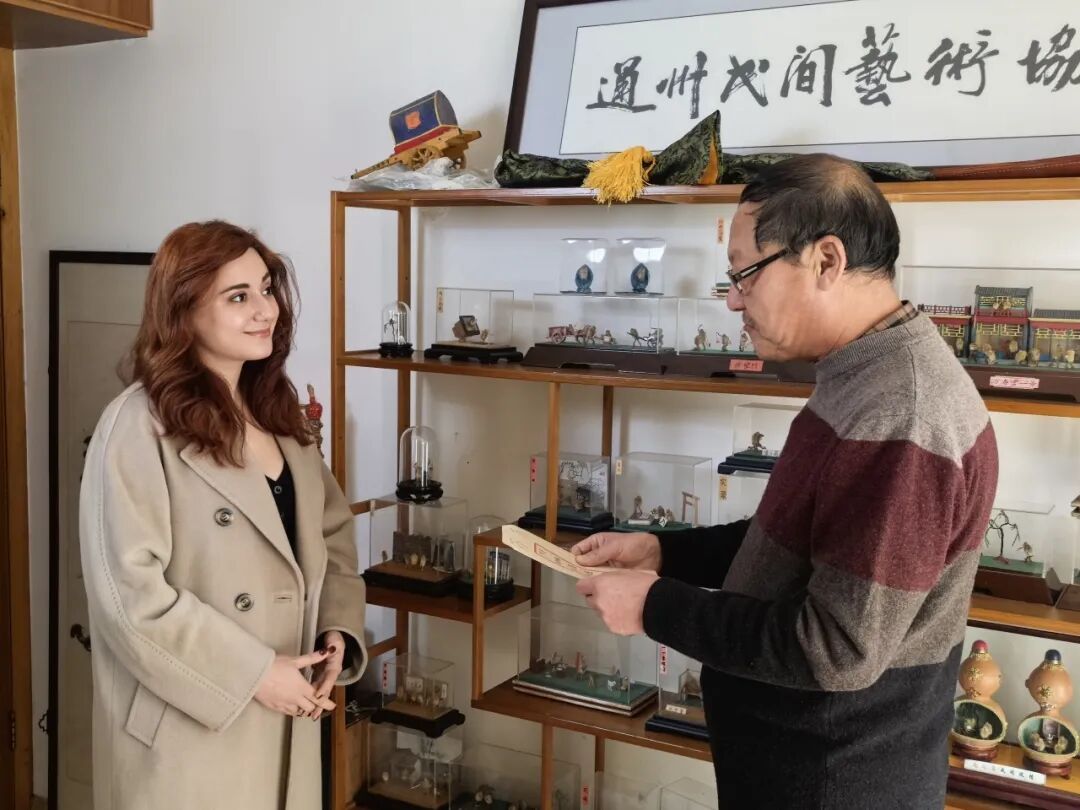
张正老师向颜爱玲介绍毛猴的历史
Mr. Zhang introduces the history of Maohou
张正老先生手把手教爱玲制作,耐心讲解“先粘头、再粘腿,静置数小时等待胶质干透”的细节。看着爱玲完成属于自己的简易毛猴,他欣慰地说:“年轻人愿意来学、愿意去分享,这门手艺就有了活下去的希望。”
Mr. Zhang guides Eliz to make Maohou hand in hand, patiently explaining details like “glue the head first, then the legs, and let the glue dry for several hours. Watching Eliz finish her own simple Maohou, he says with satisfaction, “If young people are willing to learn and share, this craft has a chance to survive.”
为了让毛猴更好地融入当代生活,他主动突破传统,将毛猴做成书签、钥匙扣等文创产品,走进校园开设手工体验课,用毛猴讲解历史故事与中药知识,让老手艺从“陈列品”转变为可触摸、可体验、可融入日常的“生活好物”。
To better integrate Maohou into modern life, Mr. Zhang has taken the initiative to break from tradition by creating cultural products such as bookmarks, keychains, and so on. He also sets up hands-on workshops on campus, using Maohou to explain historical stories and traditional medicinal knowledge, turning the ancient craft from “display pieces” into “everyday treasures” that can be touched, experienced, and incorporated into daily life.
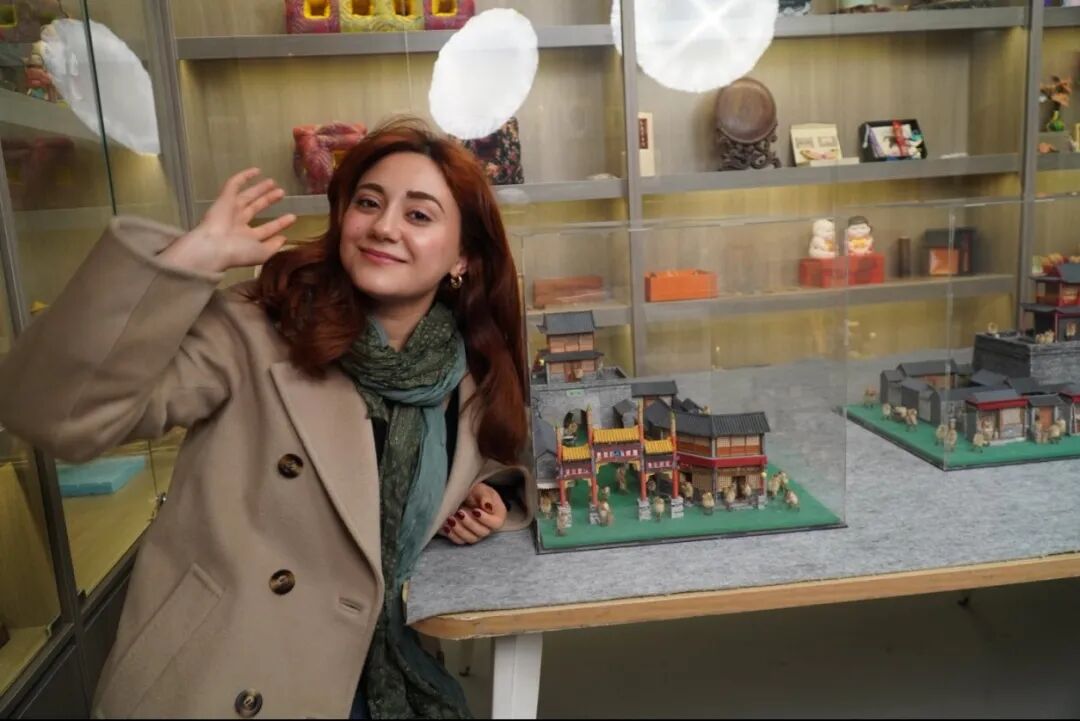
拍照打卡是年轻人记录生活的新方式
Taking check-in photos is a new way for young people to document their life
对于想要深入学习毛猴的外国年轻人,张正老先生坦言,最大的挑战并非技艺的复杂度,而是对文化背景的理解与情怀的积淀。“粘黏、修形的技巧,多练几次总能掌握;但若不懂老北京的市井生活,不了解中国的历史典故,做出来的毛猴便只有‘形’而没有‘魂’,缺少那份独特的韵味。”他的入门建议朴实而真诚:“不妨先去逛逛北京的胡同,沿着大运河走一走,听听老辈人的故事,了解辛夷、蝉蜕这些中药材的特性与文化寓意。先爱上这门手艺背后的文化与情怀,再动手学习,才能真正把毛猴做好、做活。”
For foreign young people who wish to learn Maoho, Mr. Zhang frankly states that the greatest challenge lies not in the complexity of the techniques, but in the understanding of cultural background and emotional resonance. “The skills of gluing and shaping can be mastered with practice, yet without knowledge of old Beijing’s urban life or an understanding of Chinese historical allusions, the Maohou work will only have a ‘form’ without ‘soul’, lacking that unique charm,” he offers simple yet sincere advice for beginners. “Take a stroll through Beijing’s hutongs, walk along the Grand Canal, listen to the stories of the elders, and learn about the characteristics and cultural symbolism of medicinal materials such as magnolia flower buds and cicada sloughs. Firstly fall in love with the culture and feelings behind this craft, then one can truly make Maohou figurines that are vivid and alive.
张正老先生的心愿纯粹而坚定:让毛猴成为大运河文化的鲜活注脚,让这方寸之间的草木生灵,带着温润的药香与深厚的文化底蕴,伴着悠悠运河水,跨越国界与时光,代代相传,向世界述说中国民间艺术的坚守与新生。
Mr. Zhang’s wish is pure and steadfast: to make Maohou a living footnote to the Grand Canal culture, allowing these tiny herbal creatures, carrying the warm scent of medicine and profound cultural heritage, to accompany the gentle flow of the canal, transcend borders and time, and pass down through generations, telling the world about the perseverance and renewal of Chinese folk art.
监 制:庄 阳 蔡晓娟 李海青
制片人:唐恩思 刘 颖
总导演:马宪超 崔 倩
中文审校:唐恩思
英文审校:孙 婧
摄制统筹:崔 润
责任编辑:韩汶霖
摄 像:韩汶霖 岳 鸿 张师萌 李炜翔 洪羽萱
剪 辑:黄心怡 李炜翔
撰 稿:胡子彦
翻 译:胡子彦 王斯林

北京第二外国语学院
来源丨党委宣传部
翔宇国际传播人才培养基地
编审丨黄佳丽
审定丨唐恩思
若需转载 敬请联络